

Janissary
In build
A browser multiplayer game with a server-authoritative Node.js backend.
What it is
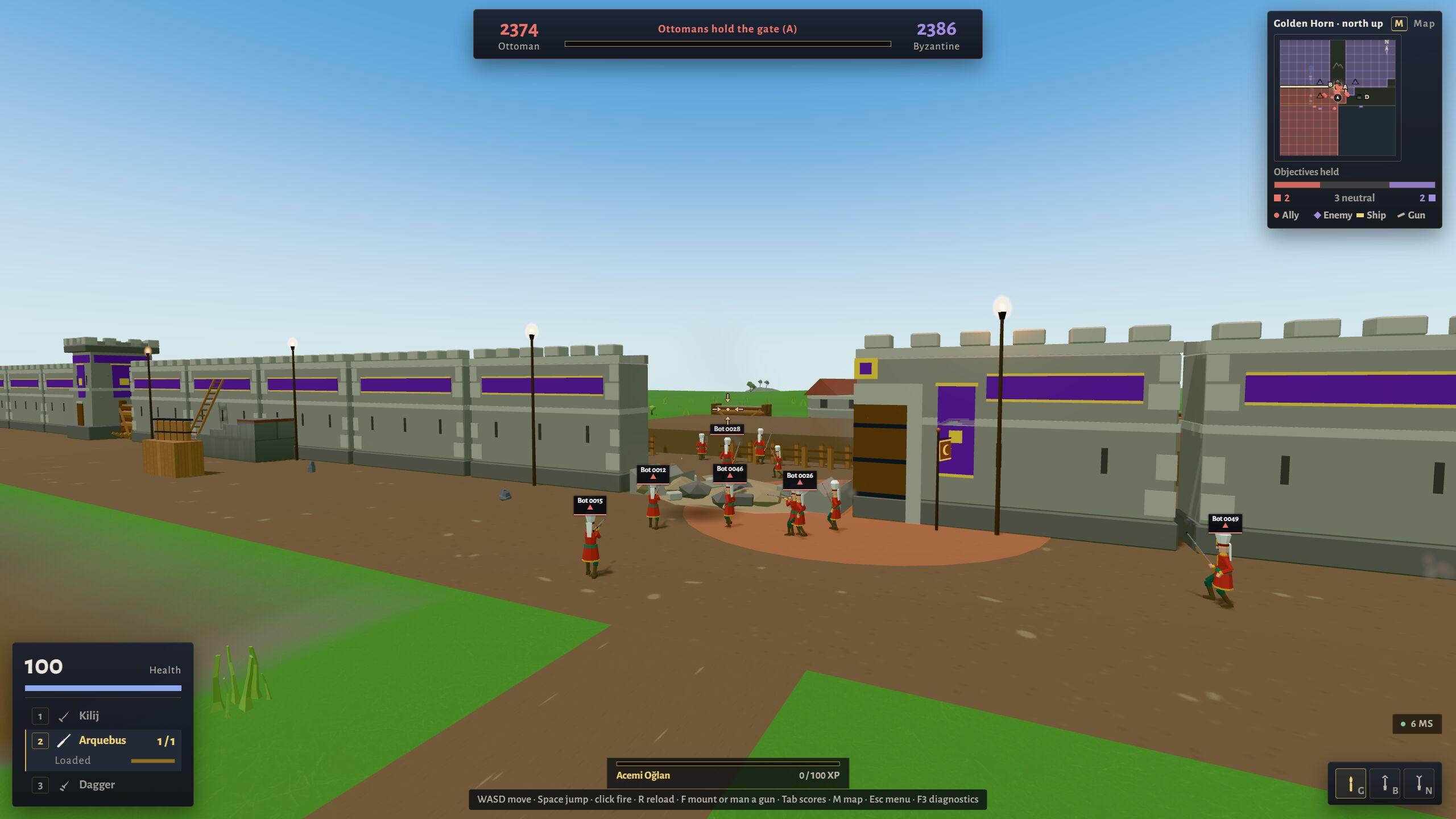
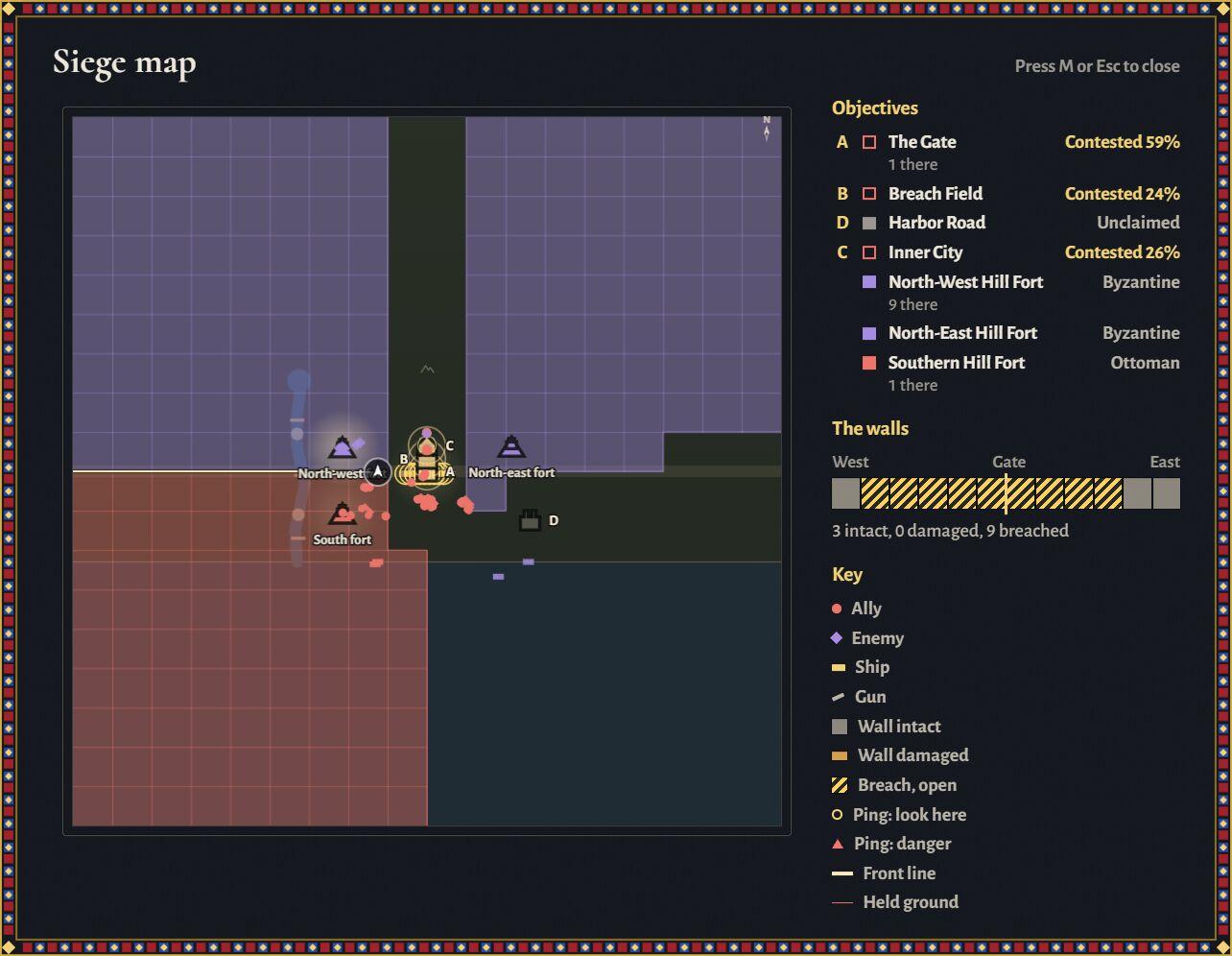
Janissary is a free multiplayer shooter that runs in the browser. It is set at the siege of Constantinople in 1453. Two sides, Ottoman and Byzantine, fight over seven capture points, and the walls can be breached. Bots fill the places that players leave empty.
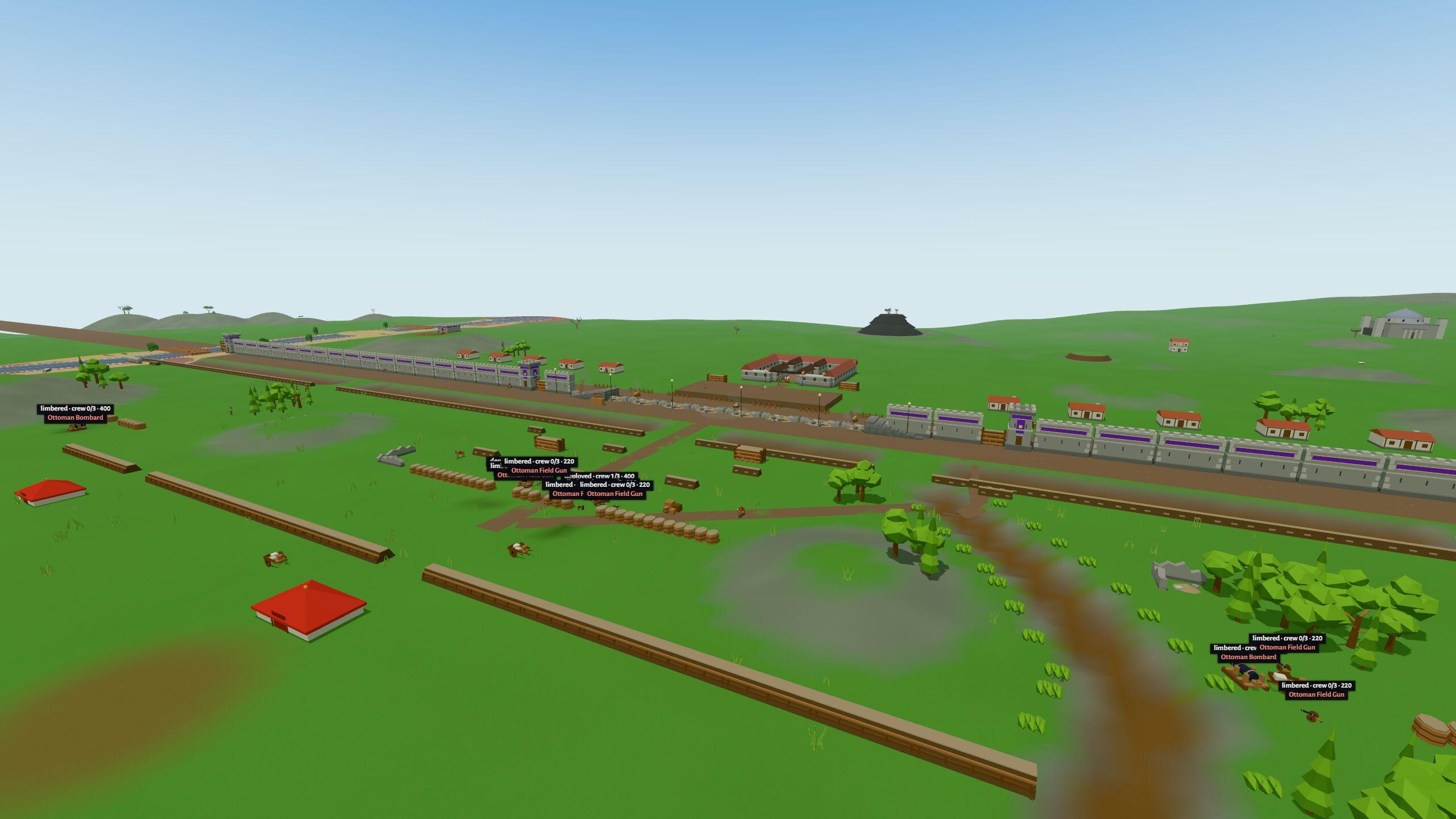
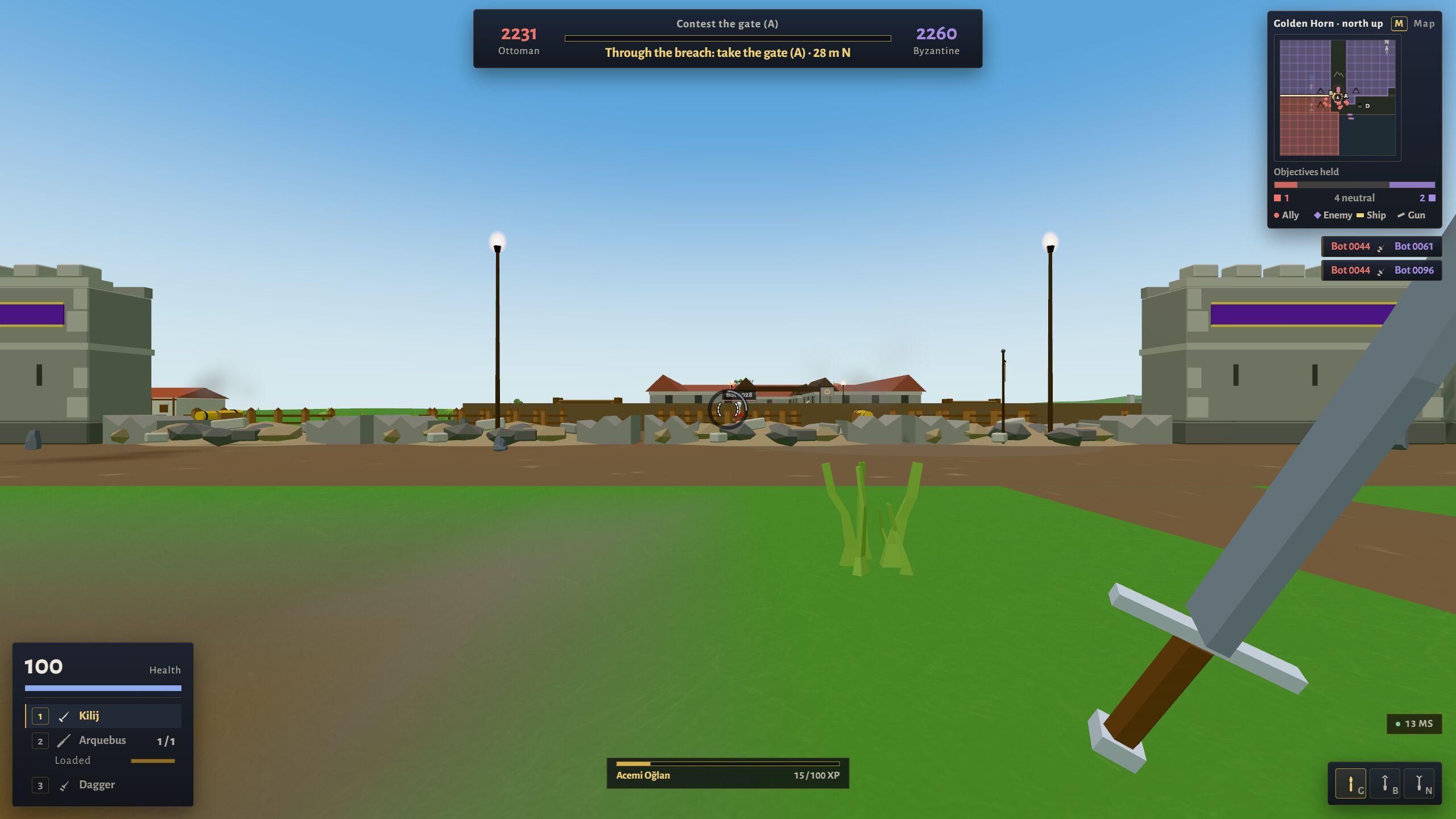
You play in first person, with your weapon in view. Up close you fight with the kilij: a wind-up and a block. The armies include Sipahi cavalry and a Mehter drummer. Galleys carry deck guns and can be sunk, and the harbour wall and its chain tower are part of the battle. Bots can fill a whole match: the captures on this page come from one with 120 of them.
My role
This is my own project and I work on it alone. I decide what gets built and I judge the result. The code is written with AI coding tools; the next part says how.
How it was built
The server is Node.js with uWebSockets.js. It runs the simulation 20 times a second and it alone decides the state of the game. Client and server talk over WebSockets in a binary protocol. The server sends snapshots and deltas, sends each player only what is near them, and compensates for lag. The client predicts movement and corrects itself against the server.
- client
- bot harness
- simulation
- lag compensation
- interest management
- snapshots and delta baselines
- client prediction
Every line between client and server crosses the binary WebSocket protocol: 38 message types, text frames refused on the hot path.
The client is built with Vite and three.js, with a React shell for the menus. Game data is stored in SQLite. Players sign in with a Supabase magic link. Players are balanced into teams when they join. A bot harness and a load tester put the server under load; every load test so far ran on one machine. The whole setup runs in Docker.
I started the project across several LLMs and tools. It is now built with Claude only.
What was tried and dropped
Generated 3D models were replaced by soldiers, horses and a world kit made in Blender. Walls made of boxes were replaced by a siege kit made in Blender. Costume skins per class were removed. A blur effect in the HUD was dropped because it cost performance.
Very large battles were a goal for launch. That was scaled back to a smaller target, with bots filling the field. The first roadmap was replaced. Storage in Postgres was planned; in practice the game uses SQLite.
Where it stands
In build. It is playable locally with bots. It is not deployed and has not been tested by players from outside. A closed alpha is the next step; a public launch is further away.
What I learned
Most of a networked game is deciding what the server must own. A load test on one machine proves less than it seems to. Cutting the size of the battles early kept the project moving.